Ankle sprains and instability
Evidence based assessment and rehabilitation to restore stability and function

Understanding ankle sprains and instability
An ankle sprain occurs when the ligaments that support the ankle are stretched or torn, typically due to a sudden twist or roll of the foot. While many sprains heal with time, some people experience ongoing instability, recurrent sprains or persistent discomfort that affects movement and activity.
At Active Health Riverina, we provide a comprehensive assessment to understand the severity of your ankle sprain, how it impacts your movement and stability, and create a tailored rehabilitation plan to help you move with confidence.
What are the types of ankle sprains?
There are 3 types of ankle sprains based on how much ligament damage has occurred:
Grade 1 (Mild): Slight stretching and damage to the fibers of the ligament. Minimal swelling & tenderness with mild impact of function
Grade 2 (Moderate): Partial tear of the ligament. Moderate swelling, pain and tenderness with decreased range of motion and instability.
Grade 3 (Severe): Complete rupture of the ligament. Severe impairment with significant swelling, pain, loss of function and marked instability.
Common symptoms
Ankle sprains and instability may present with:
- Pain and tenderness around the ankle
- Swelling and bruising shortly after injury
- A feeling of instability or “giving way”
- Difficulty walking or bearing weight
- Weakness during activity or on uneven ground
- Recurring sprains with minimal provocation
Your clinician will assess your history, symptoms, and movement patterns to clarify the cause of instability.
What causes ankle instability?
Instability can develop when:
- Ligaments are stretched or partially torn
- Muscles around the ankle remain weak after injury
- Proprioception (joint position sense) is reduced
- Movement patterns compensate due to pain or fear of re-injury
- Previous sprains have not fully resolved
Identifying underlying contributors allows us to tailor a focused program that supports lasting stability.
How we assess your ankle function
Your assessment typically includes:
- A detailed history of your injury and activity goals
- Observation of walking and functional movements
- Testing of ligament stability and range of motion
- Strength and balance evaluation
- Identification of contributing movement patterns
This thorough evaluation helps us build a plan based on your specific presentation.
Clinical examination
An ankle sprain is a complex injury that can involve multiple structures, therefore a full foot and ankle assessment is recommended.
The assessment of the injured ankle involves taking a past medical history, identifying the mechanism of injury, gait analysis, palpating the affected structures and assessing the range of motion and strength of the ankle joint. Some specific tests that your therapist may perform include:
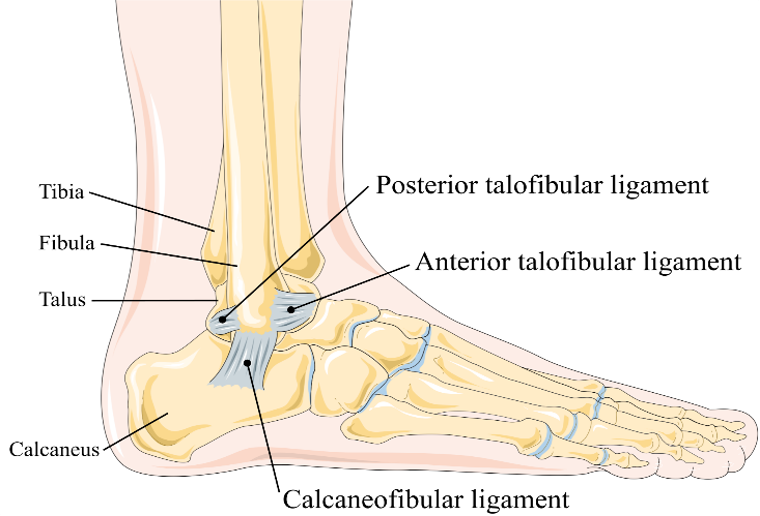
- Anterior Drawer Test: Tests the Anterior Talofibular Ligament
- Talar Tilt Test: Tests the Calcaneofibular Ligament
- Posterior Drawer Test: Tests the Posterior Talofibular Ligament
- Squeeze Test: Tests for a Syndesmosis injury
The most commonly injured ligament is the Anterior Talofibular Ligament. If the force is more severe than the Calcaneofibular Ligament & Posterior Talofibular Ligamnet can also be damaged.
How can we help?
The recurrence rate of first-time lateral ankle sprains is as high as 70%, so it is important to seek guidance to ensure an optimal recovery.
Our team of therapists play an important role in the management of ankle sprains to decrease pain and swelling, and protect the joint and its ligaments from further damage. The key to therapy is to restore functional movement and stability of the ankle joint to prevent further injury.
We recommend seeing a Therapist within the first 48 hours of an ankle sprain so that we can thoroughly assess the ankle and determine the grade of the sprain.
Most ankle sprains heal within 2-6 weeks but severe sprains may take as long as 12 weeks. A comprehensive rehabilitation program minimises the risk of re-injury and can significantly improve the stability and mobility of the ankle joint.
Common treatments include the following:
- Strengthening Exercises
- Foot & Ankle Mobilisation’s
- Balance & Proprioceptive Training
- Return to Activity-Specific Training
- Ankle Taping & Bracing
- Orthotic Therapy
- Footwear Advice
Our Practitioners with a special interest in ankle sprains and instability

Book Your Appointment
Take the first step towards moving better and feeling stronger. Book online or contact us direct to schedule your initial consultation.